ServicesWater Filtration
Whole Home Water Filtration in Westmoreland
We install filtration where the water enters your home, so every faucet, shower and appliance gets the same treated water. We test first, size the system to your water and your plumbing, and tell you what the filters will cost to keep up before anything goes in.
What a whole home system does
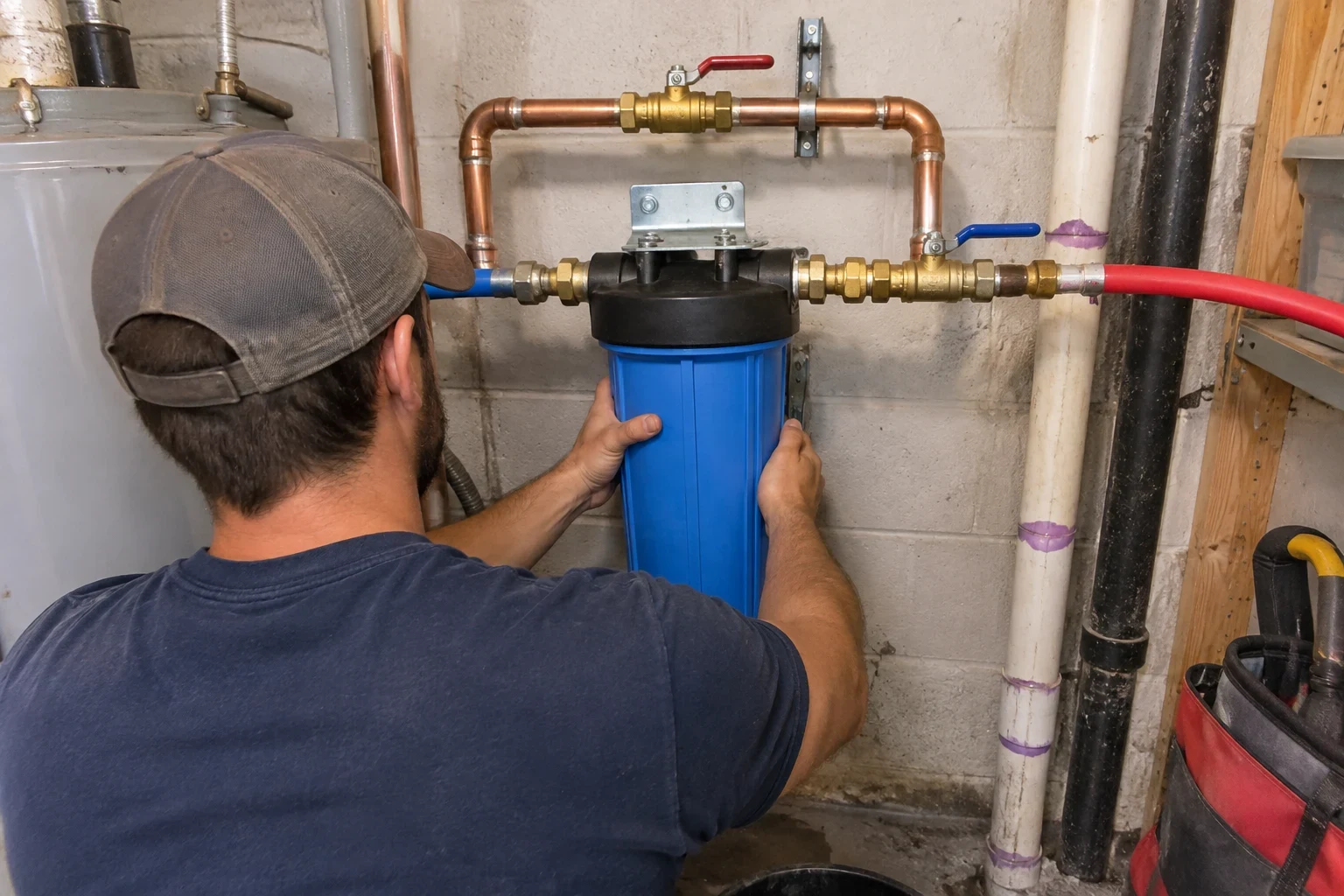
A whole home filter sits on the main line after the shutoff and before the water heater. Everything downstream gets filtered water. That is different from a pitcher or an under-sink unit, which only treats one tap.
The right setup depends on what is in your water. Chlorine taste on city water calls for carbon. Sediment and iron from a private well need a different stage. Hard water, which is common across Middle Tennessee, may need a softener or scale treatment on top of filtration. We test before we recommend, so you are not paying for stages you do not need.
Most homeowners call us before the problem gets bad. White crust on fixtures and a water heater that is losing capacity are early signs. Handling it now costs less than replacing appliances later.
What the job includes
Water testing
We check hardness, chlorine, iron, sediment and pH at your tap. You see the numbers, and we explain what each one means for your pipes and fixtures.
Sizing the system
We size by your line diameter, the number of bathrooms and your peak flow. An undersized filter drops your water pressure when two showers run at once.
Bypass and shutoff valves
We install a bypass loop with valves so you can change filters or service the system without shutting off water to the whole house.
Code-compliant install
The work is done under our Tennessee CMC-A plumbing license, with proper bonding around the filter housings so your electrical ground stays intact.
Filter schedule and costs
Before we leave, you get a written schedule for cartridge and media changes and what each one runs. That way upkeep is a line in your budget, not a surprise.
Warranty on our work
Our installation comes with a 2-year warranty. Equipment carries its own maker coverage, and we tell you what that is up front.
Signs your home could use filtration
- White crust on faucets
- Scale on fixtures and shower glass means hard water. The same buildup is forming inside your water heater and dishwasher.
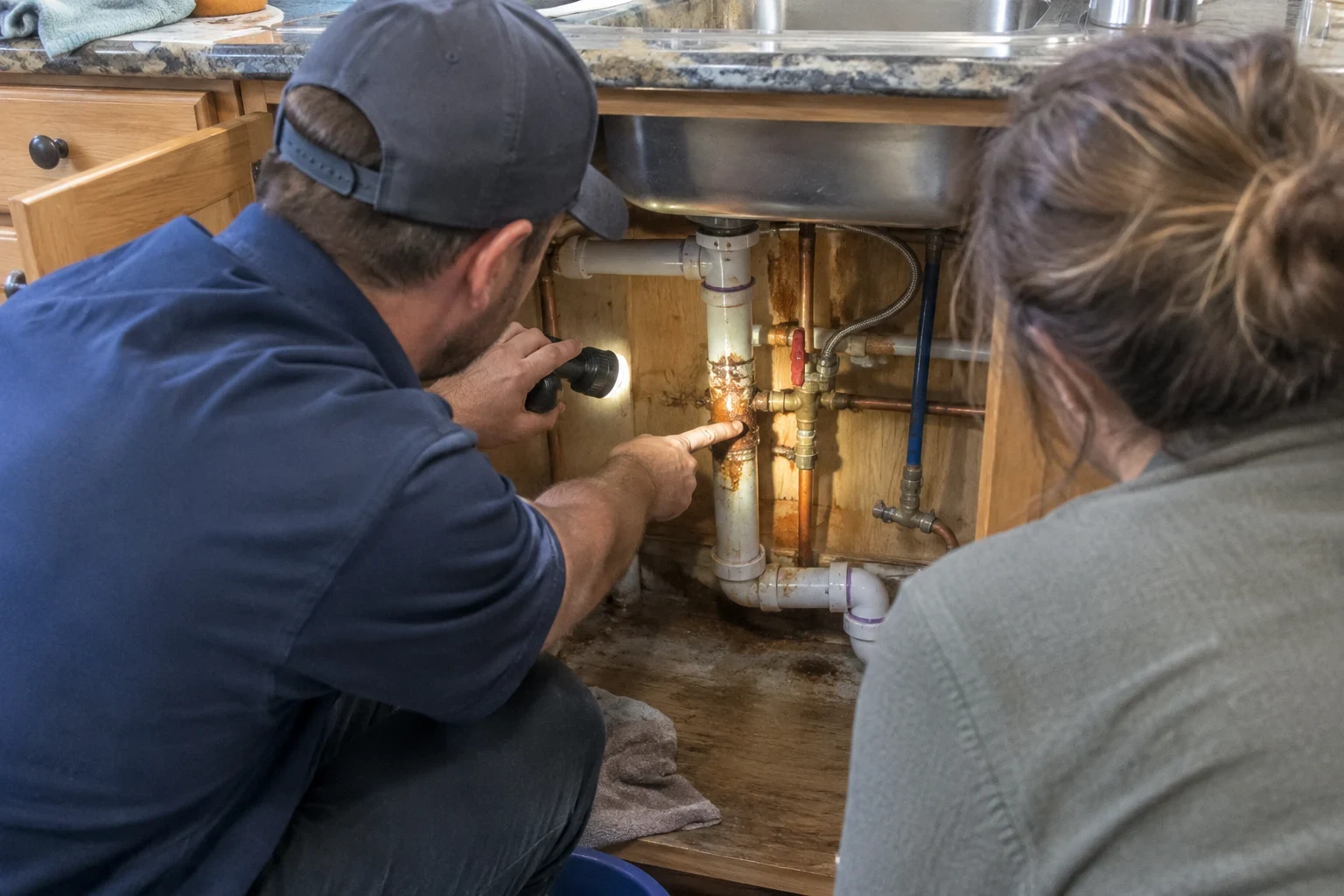
- Orange or brown stains
- Rust-colored rings in sinks and toilets usually point to iron, which is common with well water. It also stains laundry.
- Chlorine or sulfur smell
- A pool smell on city water or a rotten-egg smell on a well both have filter fixes. They are different fixes, which is why we test first.
- Grit in aerators
- Sand or sediment clogging faucet screens and appliance inlets wears out valves faster than it should.
- Water heater losing output
- Scale settles in tank bottoms and coats tankless heat exchangers. If you are planning a tankless water heater installation, filtering first protects that investment.
How the work goes
- 1
Free test and estimate
Give us a call and we pick a time that works for you. On the visit we test your water and look at where the main line comes into your home. You get a free estimate, written out line by line.
- 2
Choose your setup
Based on the test, we lay out one or two systems that fit. There is no rush to decide. If spreading the cost helps, financing options are available.
- 3
Installation
A typical install wraps up in a few hours, not days. We shut the water off while we cut the system into the main line, add the bypass and mount the housings, then turn it back on. We cover floors and walkways where we work.
- 4
Flush, retest and walkthrough
New media gets flushed before you use it. We check pressure at your fixtures and test the water again. You see how the bypass valves work and how to swap a filter, and we clean up before leaving.
What moves the price
There is no one price for whole home filtration because the water and the house both change the job. Your estimate shows each part separately so you can see where the money goes. We also list the yearly upkeep so you can plan for it.
- What is in your water
- One carbon stage for city chlorine costs less than a multi-stage setup for a well with iron, sediment and hardness.
- Size of your home
- More bathrooms and a bigger main line need larger tanks or housings to hold pressure.
- Where the line comes in
- An open spot near the main shutoff is simple. A crawlspace, tight utility closet or outdoor install with freeze protection adds labor.
- Ongoing media and cartridges
- Some systems use cheap cartridges changed often, others use media that lasts years. We compare both so you see the long-term cost, not just day one.
Water filtration questions
- Does filtering the whole house cut my water pressure?
- A properly sized system should not. Pressure loss happens when the filter is too small for the flow your home pulls at busy times. We size for that peak and measure pressure at your fixtures once the system is in.
- What is the difference between a filter and a softener?
- A filter takes out things like chlorine, sediment and some iron. A softener handles the hardness minerals that leave scale behind. Plenty of homes need one, some need both, and your water test settles which.
- Do you work on homes with a well?
- We do. Well water tends to carry more sediment and iron than city water, so it calls for a different setup. We test what comes out of your well and build the system around those results.
- How often will I need to change filters?
- That depends on your water and the system you pick. Sediment cartridges can need a swap every few months. Some carbon and media tanks go for years. We write out the schedule and what each change costs so you can plan for it.
- Is the installation covered by a warranty?
- Yes. Our installation work has a 2-year warranty. The equipment is covered separately by its maker, and we go over those terms with you before you choose a system.
Test your water before you buy anything
We will come out, test your water and give you a free written estimate with upkeep costs included. We work in Westmoreland and nearby towns like Hartsville, Lafayette and Gallatin.